

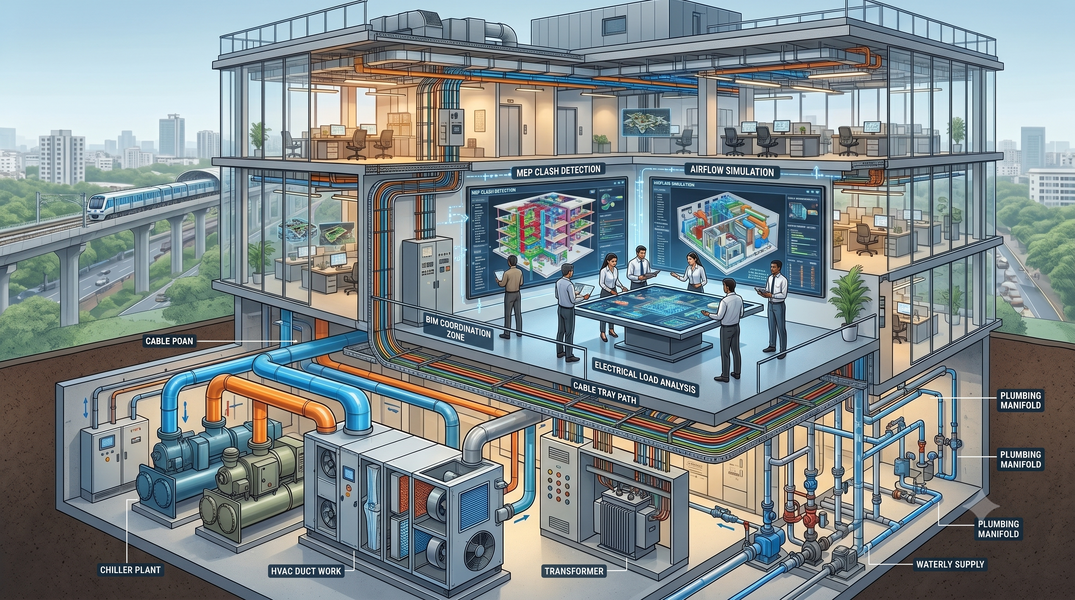
 Modern buildings rely on much more than architectural design and structural strength. Behind every functional building is a carefully planned system of mechanical, electrical, and plumbing components that ensure comfort, safety, and efficiency. These systems are collectively known as 'MEP engineering'.
MEP stands for Mechanical, Electrical, and Plumbing engineering. It is a critical discipline in the Architecture, Engineering, and Construction (AEC) industry that focuses on designing and coordinating building systems required for daily operations.
What Does MEP Engineering Include?
Mechanical Systems
Mechanical engineering covers heating, ventilation, and air conditioning (HVAC) systems. These systems regulate indoor temperature, air quality, and occupant comfort while improving energy efficiency.Electrical Systems
Electrical engineering involves power distribution, lighting design, fire alarm systems, communication networks, and backup power solutions. Proper electrical design ensures buildings operate safely and reliably.Plumbing Systems
Plumbing engineering focuses on water supply, drainage, wastewater management, and fire protection systems. Effective plumbing design supports hygiene, sustainability, and regulatory compliance.Why Is MEP Engineering Important?
MEP systems are often referred to as the backbone of a building because they directly impact functionality and occupant experience. Poorly designed systems can lead to increased operating costs, maintenance issues, and construction delays.Professional MEP engineering helps:
- Improve building performance
- Enhance energy efficiency
- Reduce operational costs
- Ensure code compliance
- Improve occupant comfort
- Minimize design conflicts
The Role of BIM in MEP Engineering
Building Information Modelling (BIM) has transformed MEP engineering by enabling engineers to create intelligent 3D models that integrate mechanical, electrical, and plumbing systems into a single coordinated environment.BIM helps identify clashes between systems before construction begins, reducing rework and improving project coordination. It also provides better visualisation and supports more informed decision-making throughout the project lifecycle.
Benefits of Outsourcing MEP Engineering Services
Many organisations choose to outsource MEP engineering services to gain access to specialised expertise and flexible project support.Benefits include:
- Access to experienced engineering professionals
- Faster project delivery
- Cost-effective resource management
- Improved design accuracy
- Scalable support for projects of all sizes
Conclusion
MEP engineering plays a vital role in creating safe, efficient, and sustainable buildings. As construction projects become more complex, the integration of advanced technologies such as BIM and digital engineering continues to improve MEP design and coordination.Organisations that invest in quality MEP engineering services can reduce project risks, improve building performance, and deliver better outcomes for clients and occupants alike.


